

The future of newsletters is bright, but it’s a far cry from its snail mail origins.![Download Now: The Future of Newsletters [Free Report]](https://no-cache.hubspot.com/cta/default/53/58c8c1bb-6a8c-44a9-8d37-7800956eccc6.png)
I’m showing my age here, but back in the late 1900s, I thought newsletters were just something fan clubs sent out in old sitcoms. It wasn’t until much later that I realized they actually exist in real life and that they can be a powerful marketing channel for all kinds of organizations and communities.
Let’s unpack what newsletters look like going into 2026, including monetization, format, and channel trends marketers need to know, from our State of Newsletter Growth Report.
Table of Contents
- Executive Summary
- The State of the Newsletters Industry
- The Future of Newsletters: Emerging Trends, Channels, & Formats
- Newsletter Monetization & Revenue Possibilities
- Frequently Asked Questions About Newsletter Trends
Executive Summary
The future of newsletters is unified, AI-powered, and multi-channel. Marketers need to move beyond inbox-only strategies to reach their audience and get creative. That means using AI for content creation, CRM-driven personalization, and integrated measurement across email, web, and social.
To succeed, focus on segmenting your audience, automating workflows, and tracking engagement with a Smart CRM like HubSpot. Prioritize deliverability, privacy, and accessibility, and choose monetization models that feel natural, not pushy. Start by reviewing your tech stack, updating your measurement dashboards, and testing new formats.
Ready to future-proof your newsletter strategy? Check out our proven framework and get started for free with HubSpot’s tools.
The State of the Newsletters Industry
As of 2024, there were more than 50,000 newsletters on the newsletter platform Beehiiv alone. That’s nearly double the number it hosted the year prior, and thousands more have been added across web platforms and inboxes in the months since.
The popularity is not limited to fan clubs, though. From niche thought leaders (like Ann Handley and Nikhil Krishnan) and content creators to corporations like Buffer and branded communities like HubSpot Media’s The Hustle, newsletters are proving to be an effective strategy for:
- Building and connecting with an audience
- Sharing expertise
- Fostering brand loyalty
- Generating website traffic and sales.
Our research also shows that LinkedIn is the most popular newsletter distribution channel, which isn’t too surprising, given its free, native newsletter offering and huge potential reach.
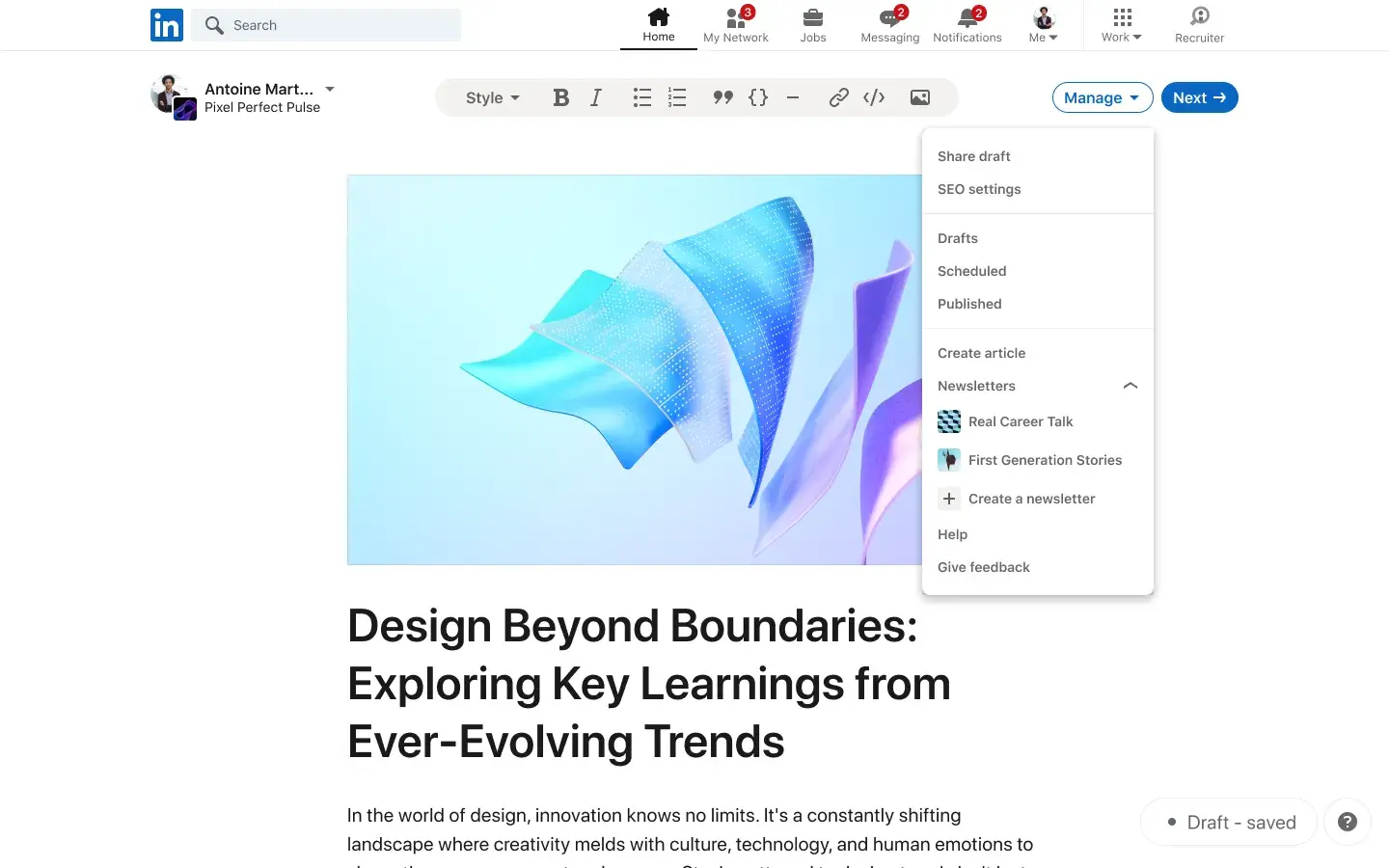
Despite this, however, email remains the top platform for consuming newsletter content — especially Gmail.
In terms of artificial intelligence, 28% of the marketers we surveyed are using AI for brainstorming and planning (i.e., outlining, making suggestions, etc.) their newsletters, and 23% plan to use it in their strategy within the next twelve months.
But those are not the only changes transforming the future of newsletters and newsletter content strategy. Let’s dig into these trends and several others.
The Future of Newsletters: Emerging Trends, Channels, & Formats
1. Web platforms for newsletters are on the rise.
While most people still read newsletters in their email inboxes, web platforms like Substack, Patreon, and even LinkedIn offer something email can’t — discoverability.
More creators and brands are publishing newsletters as web-native content (in addition to email) in the hopes of reaching new audiences and potential buyers.
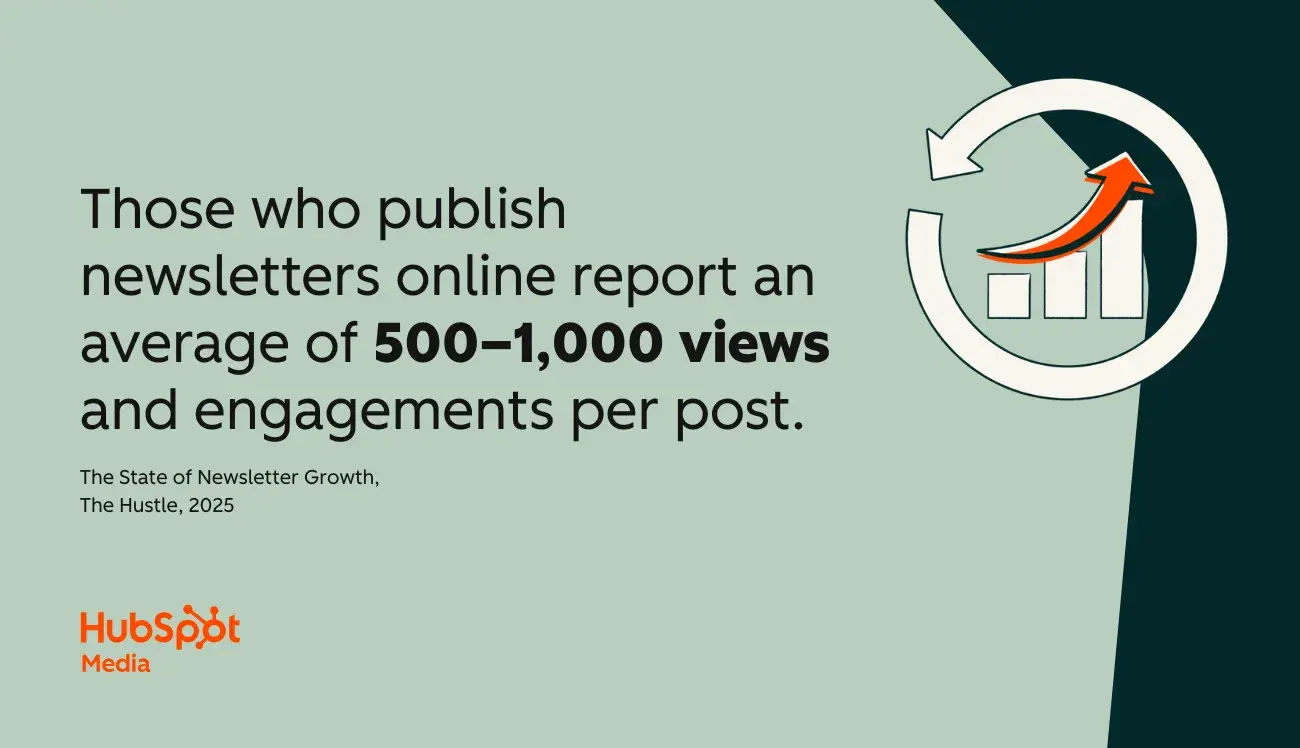
Web-native newsletters can get crawled by search engines and answer engines and also shared on social media, which is likely why those who publish online report an average of 500–1,000 views and engagements per post.
What marketers can do:
Repurpose your email newsletter content for your website or blog, making sure it’s optimized for search engines as well as AI engines like ChatGPT or Gemini.
While you don’t have to worry about duplicate content with emails, it’s still good practice to switch things up. Buyer behavior and the mediums of content you can share on a website are dramatically different from those in email. For instance, you can share a video that plays directly on a webpage, but in an email, you’re limited to a gift or thumbnail with a link.
Keep these differences in mind and lean into them to create an optimized experience.
Try using Breeze AI to rework your copy or Content Remix to repurpose your newsletter into content for other channels (i.e., social posts).
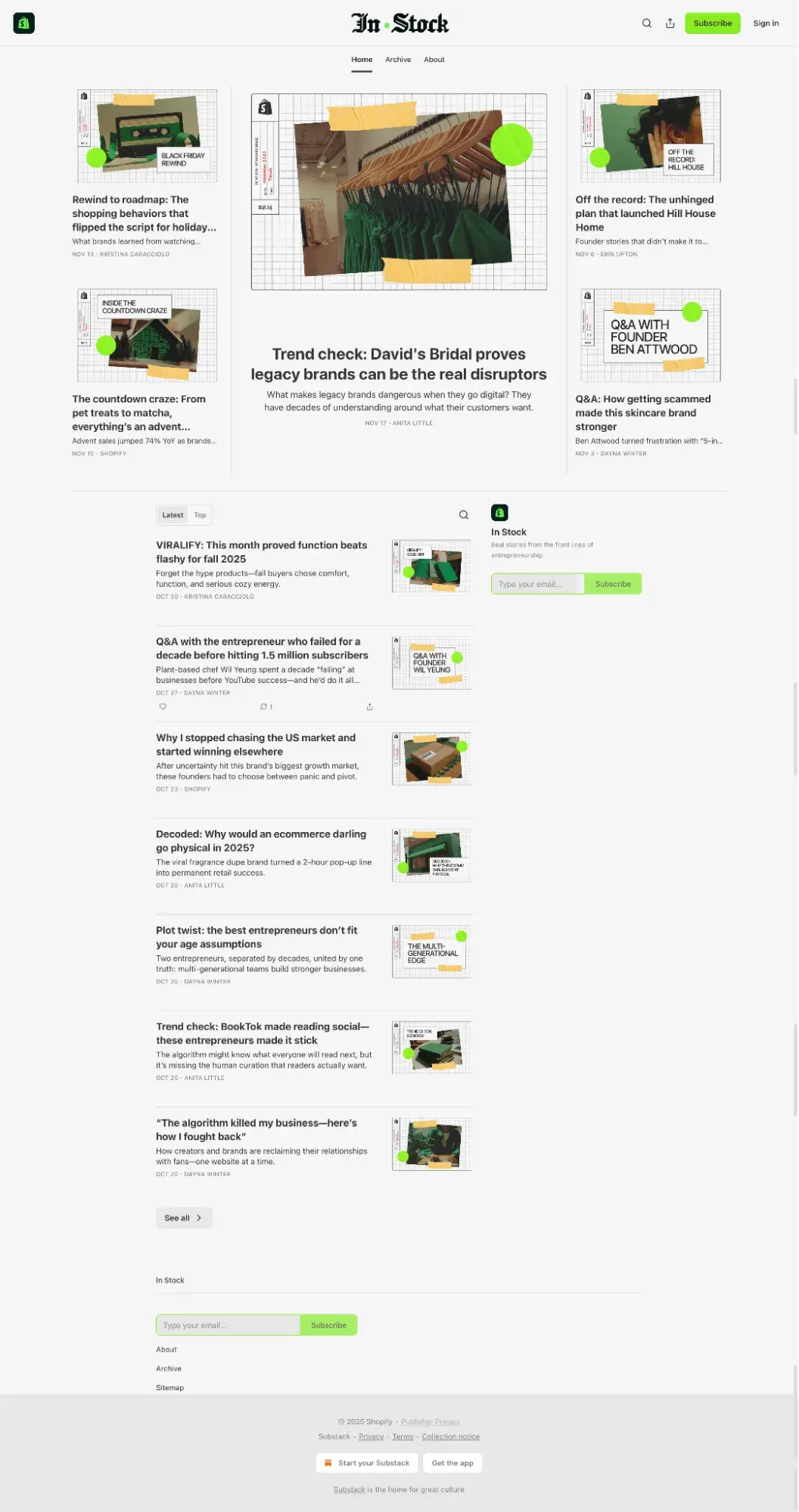
Rather than your own website, you can also explore using third-party platforms, such as LinkedIn and Substack, which have their own established audiences and email delivery. Shopify is the biggest brand so far to take to Substack with “In Stock”:
2. Brands are experimenting with formats based on reader preferences.
Like all marketing, newsletters that align with their audience are the most successful. I mean, you can’t expect customers to take what you’re giving if what you’re giving isn’t what they want.

34% of respondents reported using newsletter formats that align with how core demographics prefer to consume content, while 31% align topics with the biggest demographics that subscribe to newsletters, and 25% schedule newsletters when core demographics are most active.
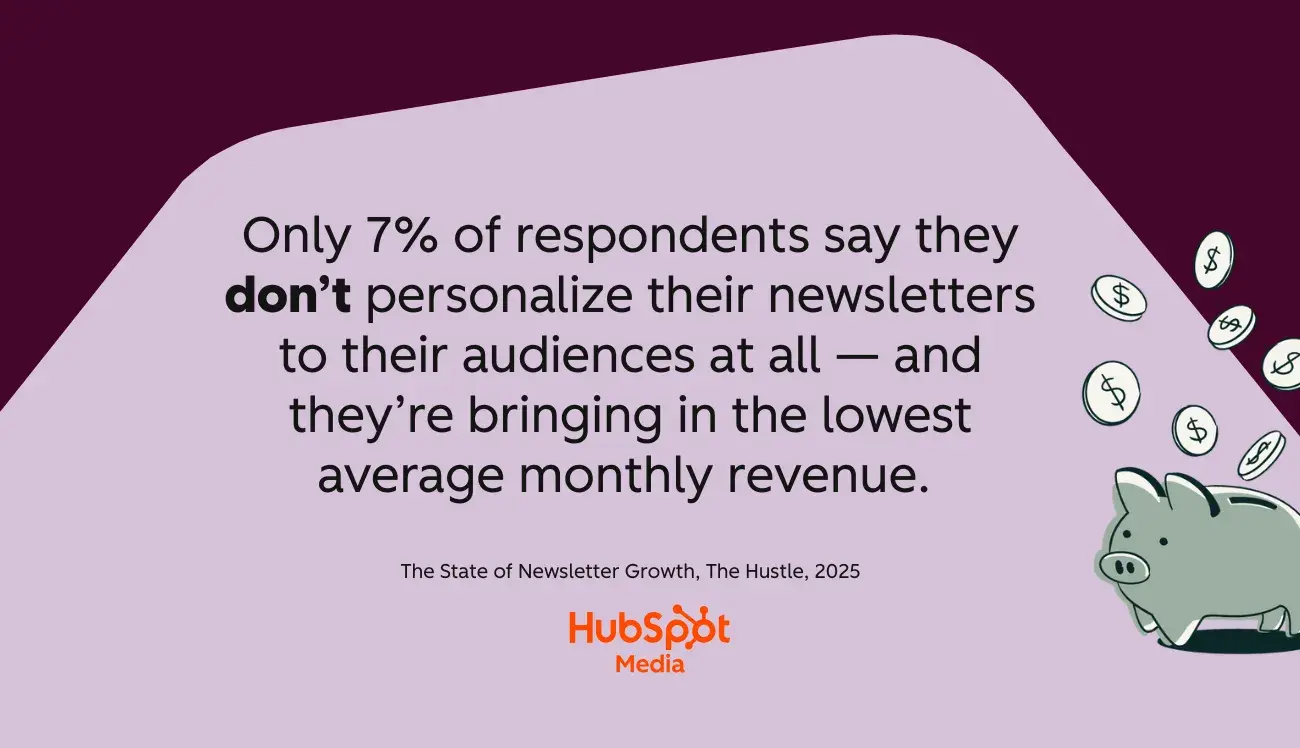
These percentages may seem low, but these were just some of the options. Only 7% of respondents say they don’t personalize their newsletters to their audiences at all, and they’re bringing in the lowest average monthly revenue. (Surprise surprise.)
Marketers who format their newsletters according to their core demographics earn the most, with monthly earnings ranging from $45,001 to $55,000.
What marketers can do:
Cater to your audience. Plain and simple.
Who are they? What do they care about? What are their behaviors? Understand what your audience wants to read about in-depth versus what they need quick access to (i.e., links to upcoming events, tools, resources) and update your format accordingly.
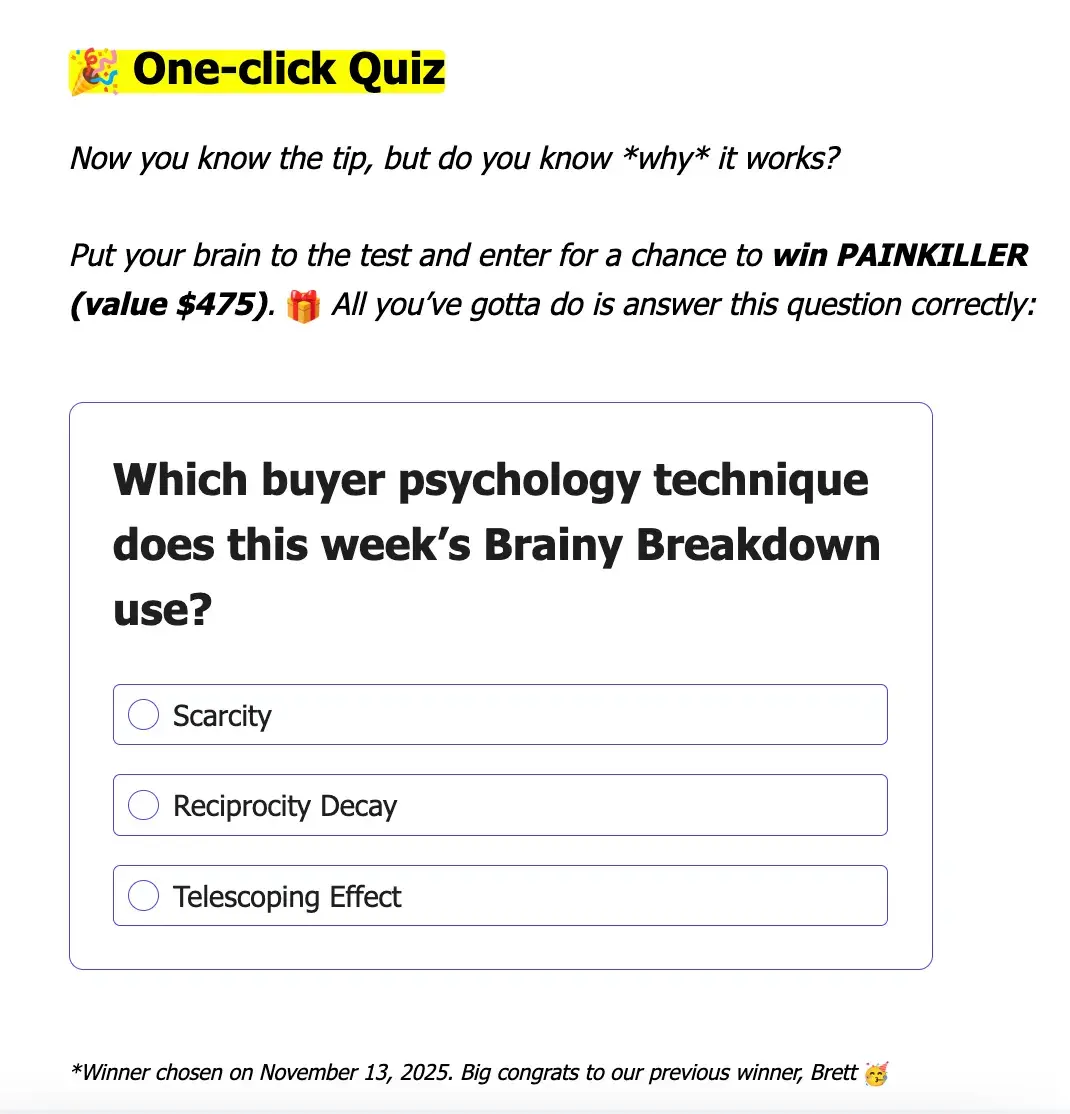
One thing that frustrated me in my years of sending marketing emails and newsletters was the creative limitations. I wanted to take the email experience from passive to active by incorporating elements like polls and video. Thankfully, there are a lot more tools available today to make those interactions possible.
For example, the Why We Buy newsletter for marketers includes a “one-click quiz” built with Kit complete with a flashy prize.
Alternatively, if you’re a little more limited in resources, you can take a link-based approach, such as The New York Times.

Whatever your means, don’t be afraid to get creative based on what your audience responds to.
Pro tip: Unfortunately, newsletters become graymail for many subscribers. When evaluating what your readers respond to, consider testing or surveying a list of only your engaged subscribers. This will help you understand what matters to those who are actually engaged.
Use a mix of content blocks, like:
- Interviews or quotes
- Resources
- News articles
- Polls
- Checklists
- Education/advice
- Product spotlights
- Short-form vs Long-form
Not to brag but my friends over at The Hustle do an awesome job of this.

3. Readers engage more with personality-driven newsletters than brand.
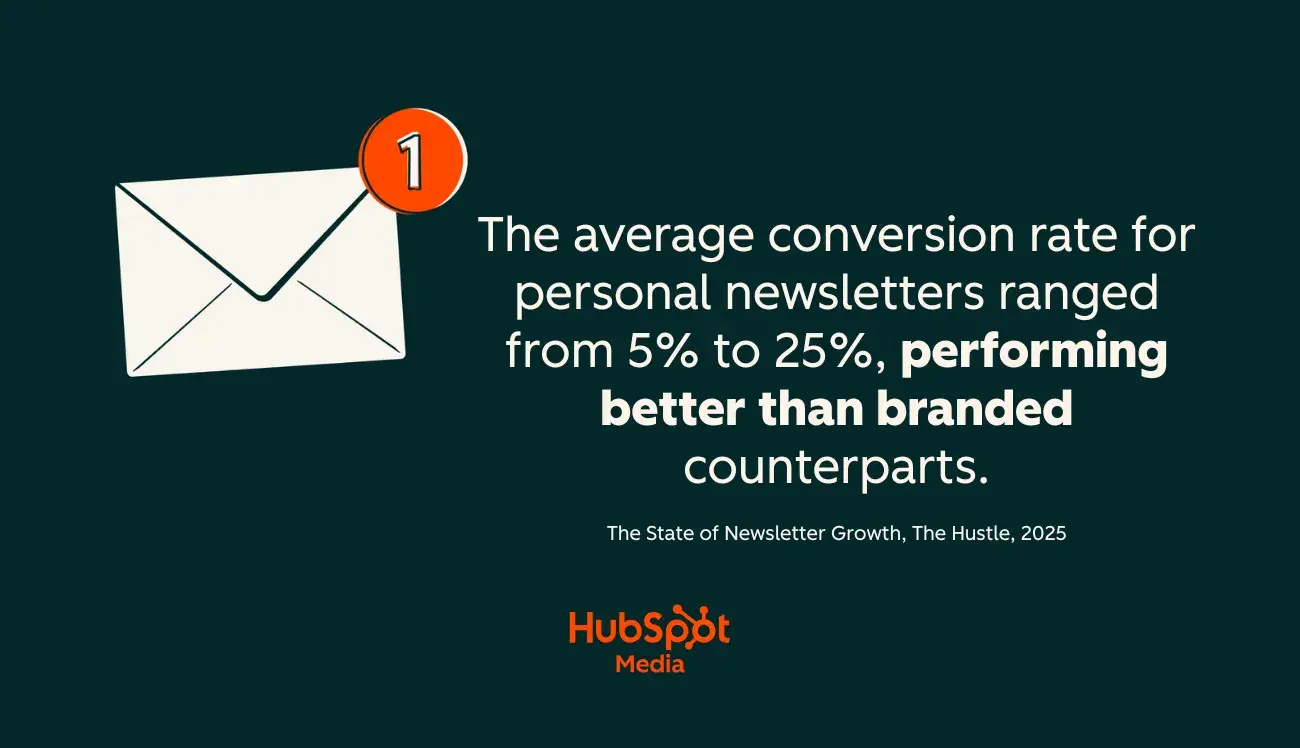
Just over half of those surveyed in our report say readers prefer newsletters from independent people over business-branded content. In fact, the average conversion rate for personal newsletters ranged from 5% to 25%, performing better than their branded counterparts.
Whether it’s our increasingly virtual lives or simply human nature, people clearly crave and respond to connection with other human beings. Most consumers also trust word of mouth from other people more than they trust claims from brands, and personality-driven newsletters tap into this.
What marketers can do:
Even if you’re representing a brand, have a dedicated writer or team of writers behind your newsletter. These personalities are your spokespeople or “hosts.” They give readers someone human to recognize and connect with rather than just a cold, faceless brand.
Sarah Schmidt, President of Interdependence, a PR and strategic communications firm that manages Instagram accounts for celebrities, CEOs, and brands, says putting a face to the business is now essential, and it doesn’t always have to be the company founder.
“We’ve had the most success when someone from the team becomes a consistent presence — a personality followers can connect with,” she says. “When that person shows up with opinions, behind-the-scenes context, and a sense of humor, the brand becomes more than a logo, it becomes a point of view.”
Take our new “The Science of Scaling” newsletter. My fellow HubSpotter and former teammate Jay Fuchs pens this weekly email.
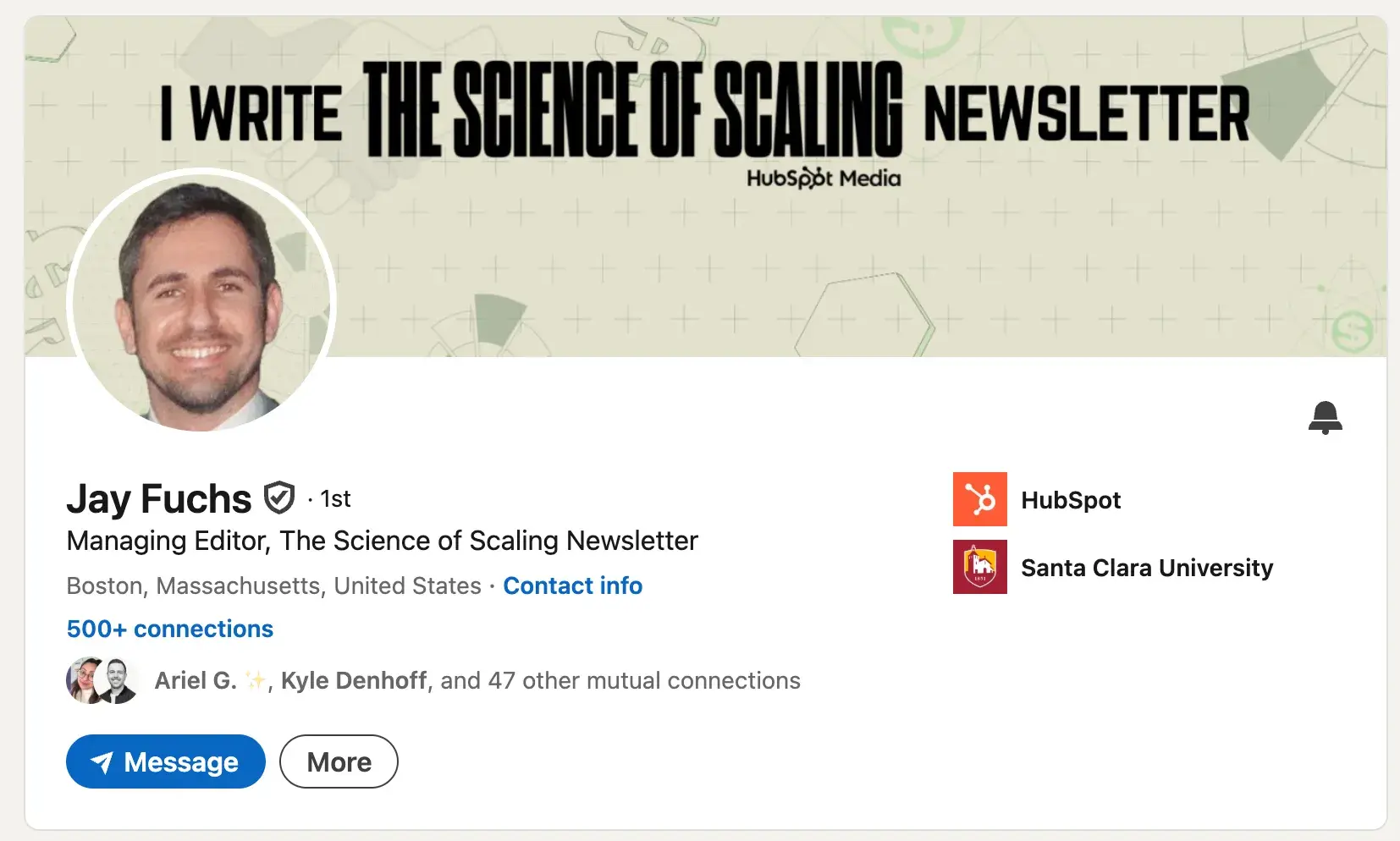
In it, readers get invaluable sales tips, but also a healthy dash of Fuchs’ signature humor, perspectives, and expertise.
Meanwhile, Shopify’s “In Stock” is authored by a four-person team, consisting of Dayna Winter, Shopify’s newsroom lead, and other members of Shopify’s communications division.
People pay attention to (and often pay for) real, exclusive insights — Not the same old opinions they can get across social media or competitor blogs.
To build and maintain your subscriber list and even close sales, newsletters need to get people hooked on their unique perspective and style, and how they curate their niche. They have to give people something they can’t get anywhere else to warrant subscribing.
Using personality-led content to tap into storytelling and the human experience can be the ticket to standing out from the masses and the AI-generated, unedited competition.
Speaking of which …
4. AI is leaving a mark on newsletter strategy and executive.
AI is everywhere these days, and newsletter strategy is no different. As we already saw, many marketers are already using AI to brainstorm and outline their newsletters. Well, nearly 25% of them say this saves them 1-2 hours per week.
52-104 hours saved a year isn’t too shabby.
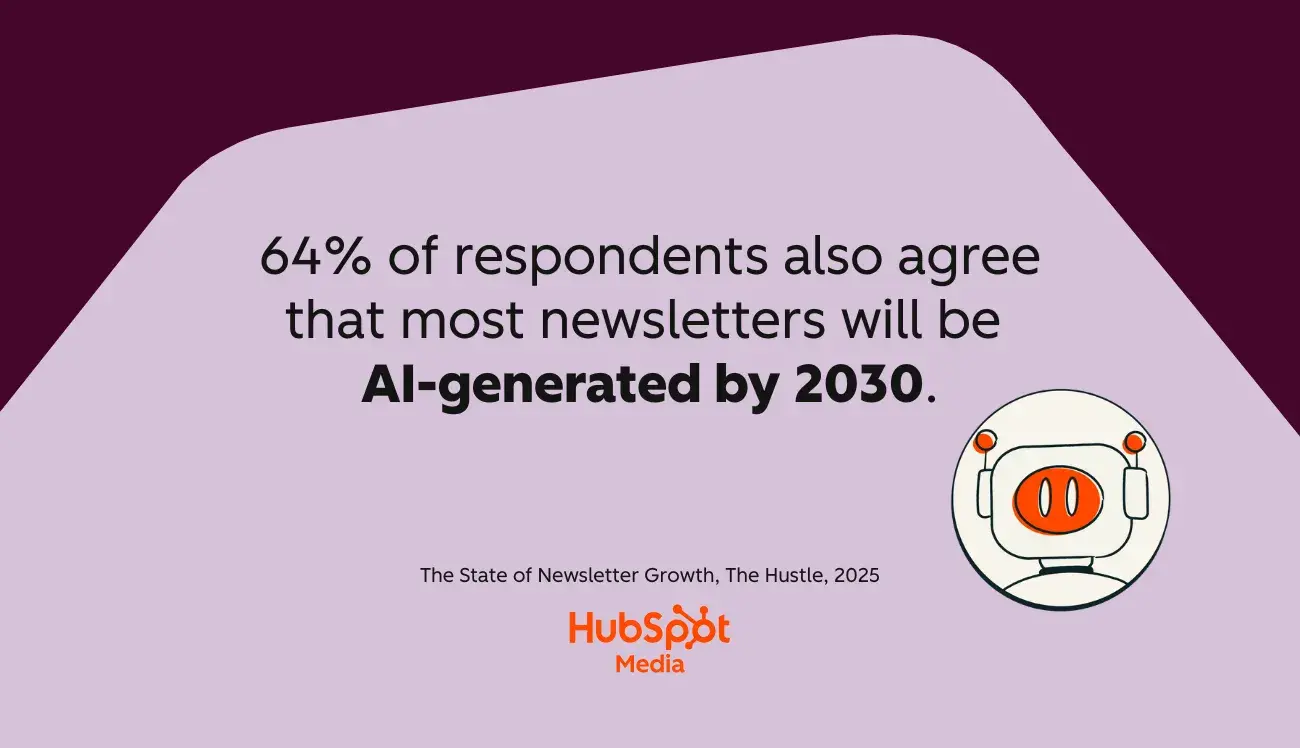
64% of respondents also agree that most newsletters will be AI-generated by 2030 — but this creates a whole new landscape. AI, by its very nature, is derivative. It creates based on existing things, and, speaking from experience, plagiarism and duplicate content are very real concerns.
If AI is writing most newsletters, then putting a human back behind the keyboard will be a powerful differentiator.
What marketers can do:
Human editing and oversight are essential when using AI for newsletters; however, you can set up AI tools to learn your brand voice and identity to hopefully keep them to a minimum.
Read: How to Humanize AI Content So It Will Rank, Engage, and Get Shared in 2025
The “Express” phase of the loop marketing framework is focused on that. During it, you establish a crystal-clear style guide and give it to AI, so every asset the tech generates is on brand.
But AI isn’t just for generating content. Explore using it to:
- Creating niche customer segments
- Using predictive analytics to make personalized content recommendations
- Track and analyze behavioral data to find trends about what your audience likes
- Personalize your newsletter with reader data
Generate your brand voice and style guide with Breeze AI.
5. Personalization and relevance are more important than ever.
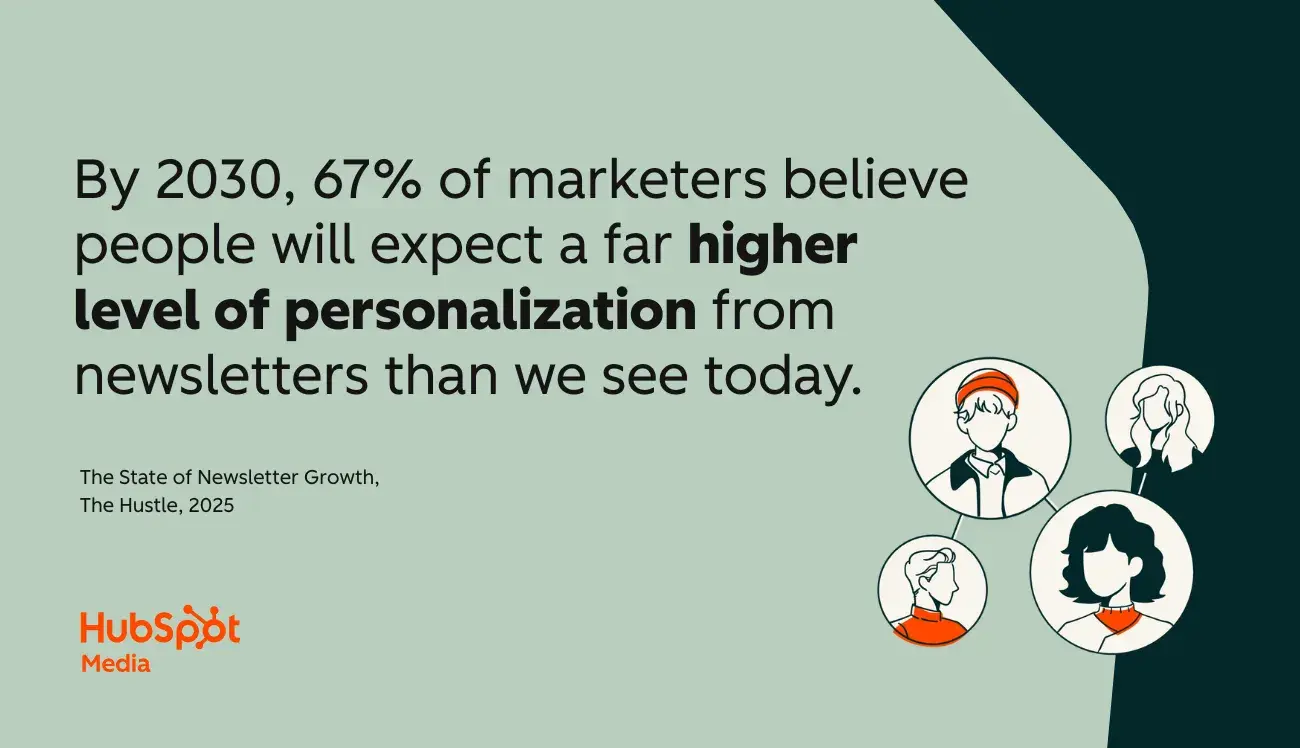
By 2030, 67% of marketers believe people will expect a far higher level of personalization from newsletters than we see today.
That means it’s not enough to just send generic updates or slap [first name] on a newsletter anymore. Audiences don’t want to feel like a number. They want to feel like every message was crafted just for them.
Luckily, personalization is another area where AI excels and can help you scale.
What marketers can do:
Instead of leaning into broad segments, brands should move toward 1:1 personalization even in transactional emails. It can be used to:
- Tailor content based on CRM data (i.e., name, location)
- Make content recommendations based on pages viewed, services/products bought.
- Adjust tone based on demographics, season, etc.
Whether you’re a large enterprise or a solo creator, integrating AI with your CRM can help you deliver the right message to the right person — automatically.
In fact, HubSpot’s own marketing team recently found success with this.
We built an AI system that analyzes a contact’s business website, evaluates the offers or resources they’ve downloaded, and then predicts what they’re trying to achieve. The AI then used that data to generate a custom content offer, and personalized message aligned to that individual’s goals.
The results were incredible:
- 82% increase in conversion rates
- 30% higher open rates
- 50% increase in click-through rates
For a detailed walkthrough on how to build personalization into your email strategy, check out HubSpot’s guide on dynamic email personalization.
Newsletter Monetization & Revenue Possibilities
|
Goal |
Best Model(s) |
Why It Works |
|
Build steady recurring revenue |
Paid subscriptions, memberships |
Predictable income, loyal audience |
|
Drive product or service sales |
Product/service promotions |
Ties newsletter directly to business ROI |
|
Grow audience reach and partnerships |
Sponsorships, affiliate marketing, third-party platforms |
Scales with visibility and credibility |
|
Deepen community engagement |
Premium communities, events |
Builds loyalty and perceived value |
|
Maintain independence and authenticity |
Donations |
Reader-supported, mission-aligned |
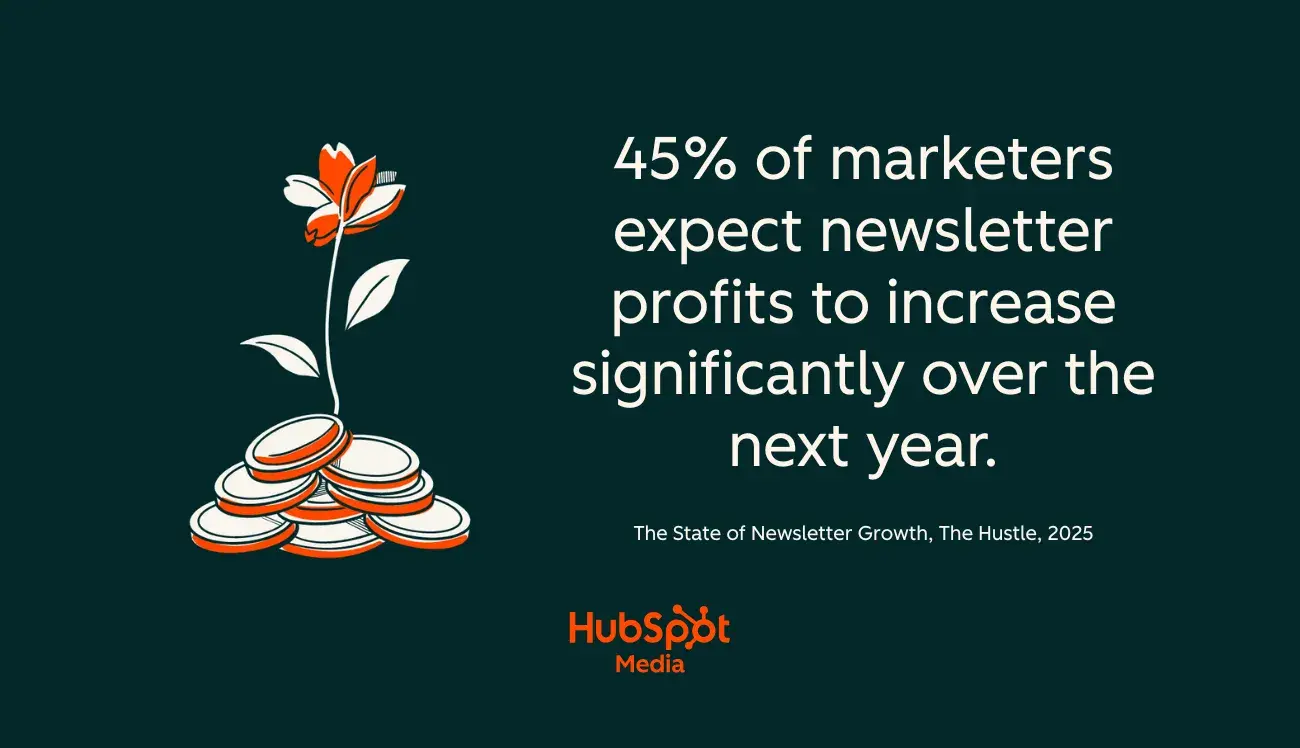
As the industry matures, 45% of marketers expect newsletter profits to increase significantly over the next year. But what does that revenue actually look like?
According to recent survey data:
- 30% of newsletter creators earn income through product, service, or membership sales promoted within their newsletter.
- 16% generate revenue through paid subscriptions to their newsletter.
- 16% monetize via sponsorships and advertising — selling placement within their newsletters to brands aligned with their niche.
Other brands explore community engagement, donations, or even audience arbitrage. The best monetization model depends on your audience, goals, and brand type. Here are some tips to keep in mind.
For Businesses and Brands
If you’re running a company newsletter, treat it like a performance marketing channel.
- Include contextual CTAs to your products or services where relevant in your newsletter
- Use UTM tracking and CRM integration to measure conversions from email clicks.
- Attribute revenue through lifecycle stages (e.g., subscriber → lead → MQL → customer) instead of relying on last-click metrics. This ensures you see the full pipeline impact of your newsletter — not just immediate clicks.
For Individual Creators
If you’re an independent publisher or thought leader, paid subscriptions are a powerful way to grow sustainable income. Offer tiered membership options inspired by creators like Rachel Karten’s “Link in Bio” newsletter.
Premium subscribers may receive perks such as extra weekly issues or bonus content, access to a private Slack or Discord community, one-on-one consultations or Q&A sessions, or exclusive reports and data-driven insights.
This model can work for brands as well; you just need an audience that is loyal, niche, and values your expertise.
Frequently Asked Questions About Newsletter Trends
Should newsletters move beyond email to web posts or social?
Yes — if you want to grow reach and visibility, establishing a presence for your newsletter on a public, web-based platform will make it accessible to search and AI engines unlike email. Email builds relationships, while web and social aid discovery. Use your CRM, like HubSpot, to unite metrics and track cross-channel engagement.
How often should you send newsletters next year?
There’s no one-size-fits-all frequency for newsletters. Some companies may send once a week, while others go quarterly. It really depends on your audience and the nature of the information you’re sharing.
I’d recommend starting with a biweekly or monthly schedule, then monitoring open rates and engagement to find your sweet spot. HubSpot’s reporting and analytics can help you evaluate these email metrics and more.
What’s the best newsletter format to start with?
Again, this depends on your audience, but it’s not a bad idea to start modular:
- A personal intro
- 3–5 curated links or tips
- One deep-dive story
- One strong CTA
This format is flexible, scalable, and easy to personalize over time, especially with HubSpot’s drag-and-drop email templates.
Which AI tasks are safest to automate today?
Start with strategy and short copy. Think tasks like:
- Brainstorming topic ideas
- Brainstorming and testing subject lines
- Testing content variations
Keep human review for tone, brand alignment, and storytelling.
How do you avoid sounding generic with AI?
Create a brand voice guide, train your AI tools with proprietary examples, and always add personal commentary or experience. Authenticity and originality will be your biggest differentiators. I also recommend adding unique examples, quotes, and mixed media. Learn more here.
The Future is (More Than Just) Email
The future of newsletters is personal, data-driven, and multi-channel. Whether you’re a solo creator or a brand, the key is to combine automation with authenticity, email with web presence, and to measure every step of the way.
Want to build a future-ready newsletter program? Explore the Loop Marketing Framework to connect your channels and grow smarter in 2026.




![AI and SEO: What AI means for the future of SEO [Expert Tips & Interview]](https://firstonlineprofits.com/wp-content/uploads/2026/03/b5296305-8ec6-4375-8245-aadbacbd4058-alith-resize-100x90.png)

![AI and SEO: What AI means for the future of SEO [Expert Tips & Interview]](https://firstonlineprofits.com/wp-content/uploads/2026/03/b5296305-8ec6-4375-8245-aadbacbd4058-alith-resize-800x500.png)

Last Comments